So, where exactly is Ketchikan, Alaska?
Perched at the Edge of the World (Sort Of)
Ketchikan is located in Southeast Alaska, tucked along the southwestern coast of Revillagigedo Island — a name locals have mercifully shortened to “Revilla.” It sits about 90 miles north of Prince Rupert, British Columbia, making it the southernmost city in Alaska and often the first port of call for cruise ships heading north through the Inside Passage.
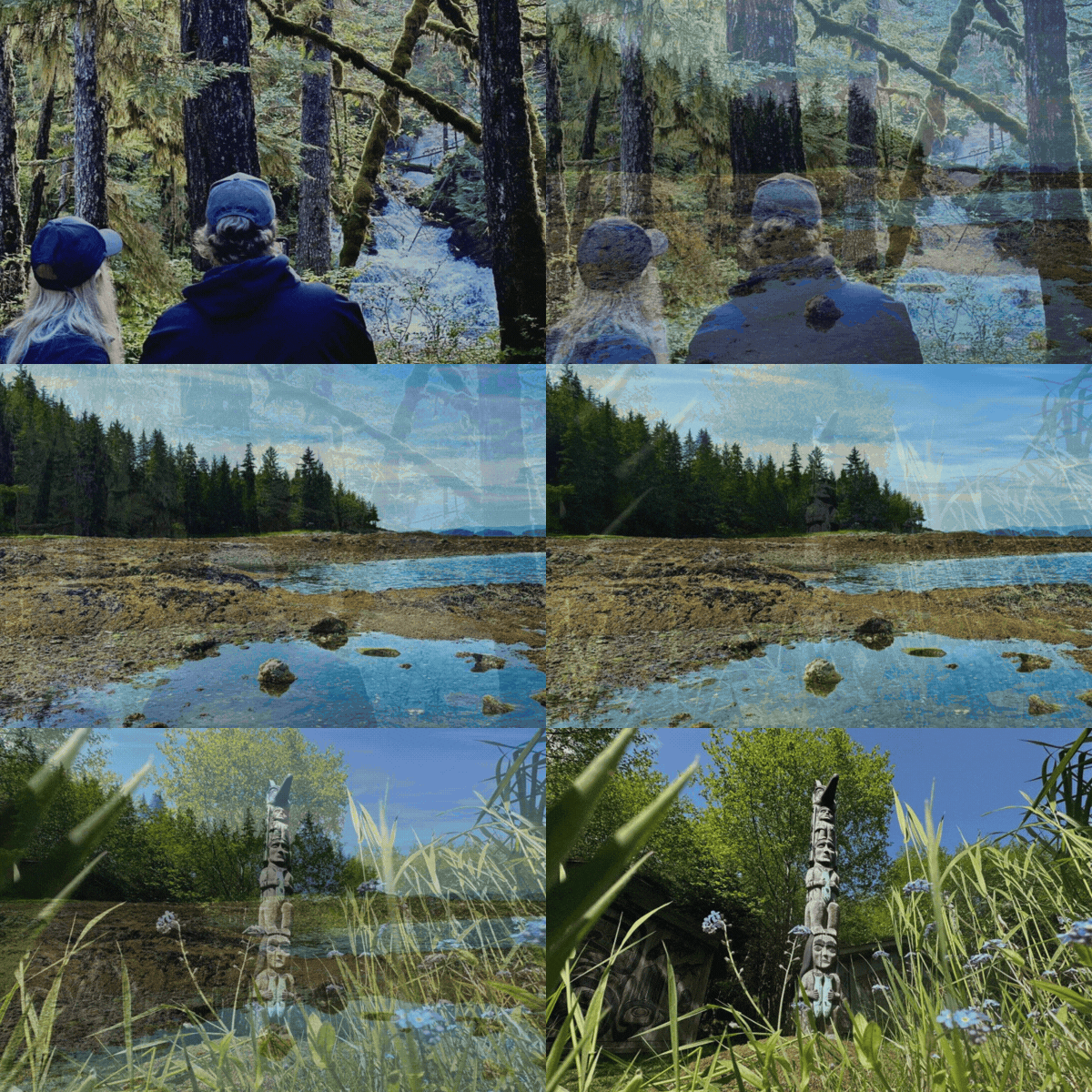
That geography matters. Ketchikan isn’t connected to the rest of Alaska — or anywhere else — by road. The only ways in are by sea or air, which gives the town a wonderfully remote, end-of-the-road feel even though it’s one of Alaska’s most-visited destinations. The surrounding waters of the Tongass Narrows and the vast Tongass National Forest — the largest national forest in the United States — frame nearly every view.
A Town Built on Fish, Timber, and Tlingit Roots
Long before European explorers or American settlers arrived, this stretch of coastline was home to the Tlingit people, who called the area Kichx̱áan — a name that likely referred to the thundering waterfall on Ketchikan Creek. The creek itself became the beating heart of the community; in its heyday, it was lined wall-to-wall with salmon canneries, making Ketchikan one of the most productive fishing ports in the world.
By the early 20th century, Ketchikan had earned the nickname “Salmon Capital of the World,” and the fishing industry brought workers, wealth, and a certain rough-and-tumble energy to the waterfront. Timber followed, with logging operations expanding deep into the surrounding Tongass rainforest throughout the mid-century.
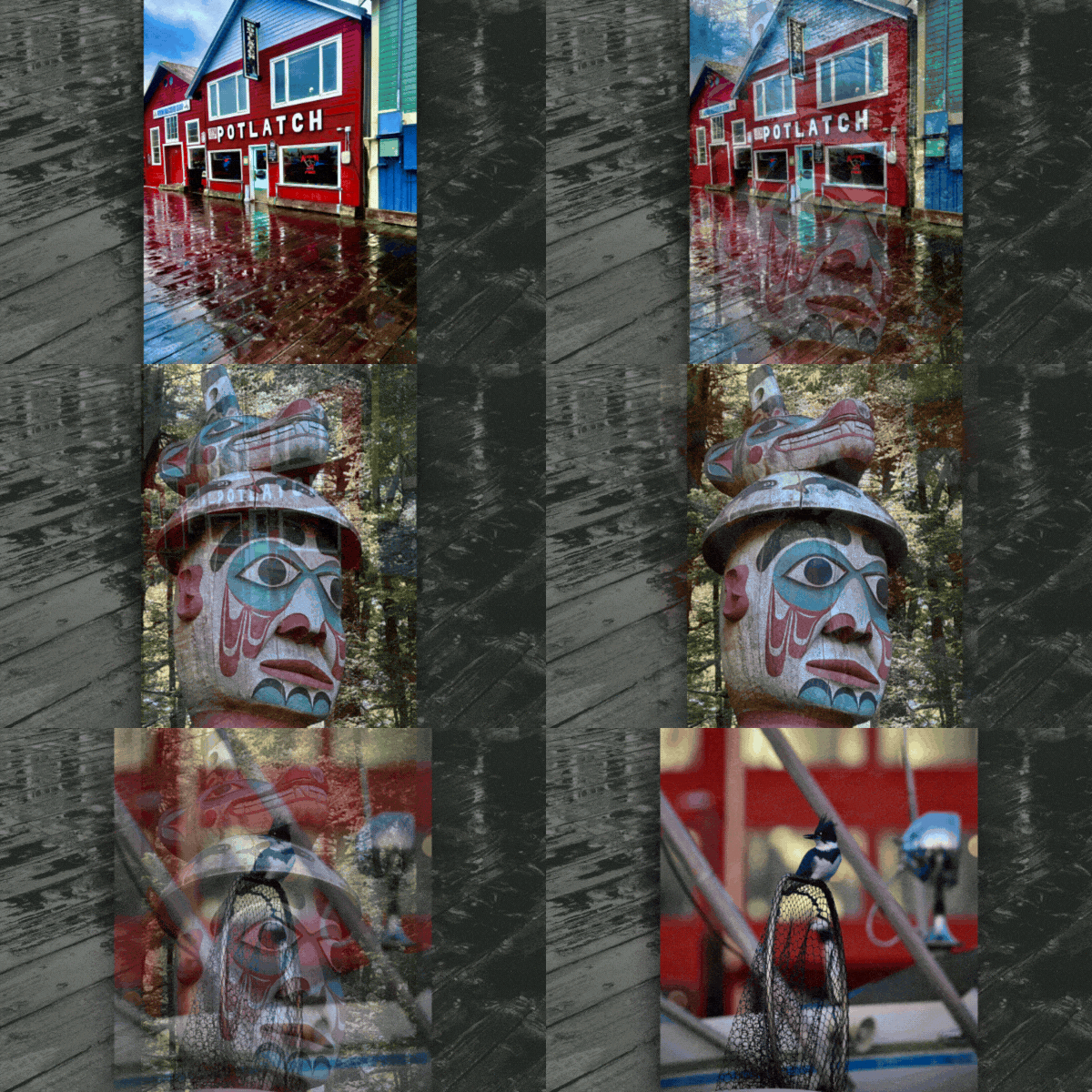
Today, tourism has taken center stage alongside commercial fishing, but the Tlingit heritage remains deeply woven into the fabric of the city. Ketchikan is home to the world’s largest collection of standing totem poles, and the art, language, and traditions of the Tlingit, Haida, and Tsimshian peoples are very much alive here — not as museum pieces, but as a living culture you can encounter throughout your visit.
Small City, Big Personality
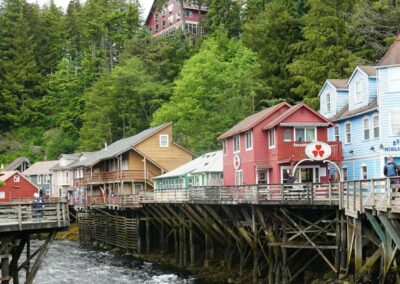
With a population of around 8,000 people, Ketchikan is compact enough to walk most of in an afternoon — but don’t let the size fool you. The historic Creek Street district, once a notorious red-light district now lined with colorful shops perched on pilings over the creek, is endlessly photogenic. The downtown waterfront buzzes with activity when cruise ships are in port (and Ketchikan sees a lot of cruise ships). And just minutes outside of town, the wilderness takes over completely.
That contrast — a walkable historic town surrounded by untouched rainforest and some of the best wildlife viewing in Alaska — is really what makes Ketchikan special.