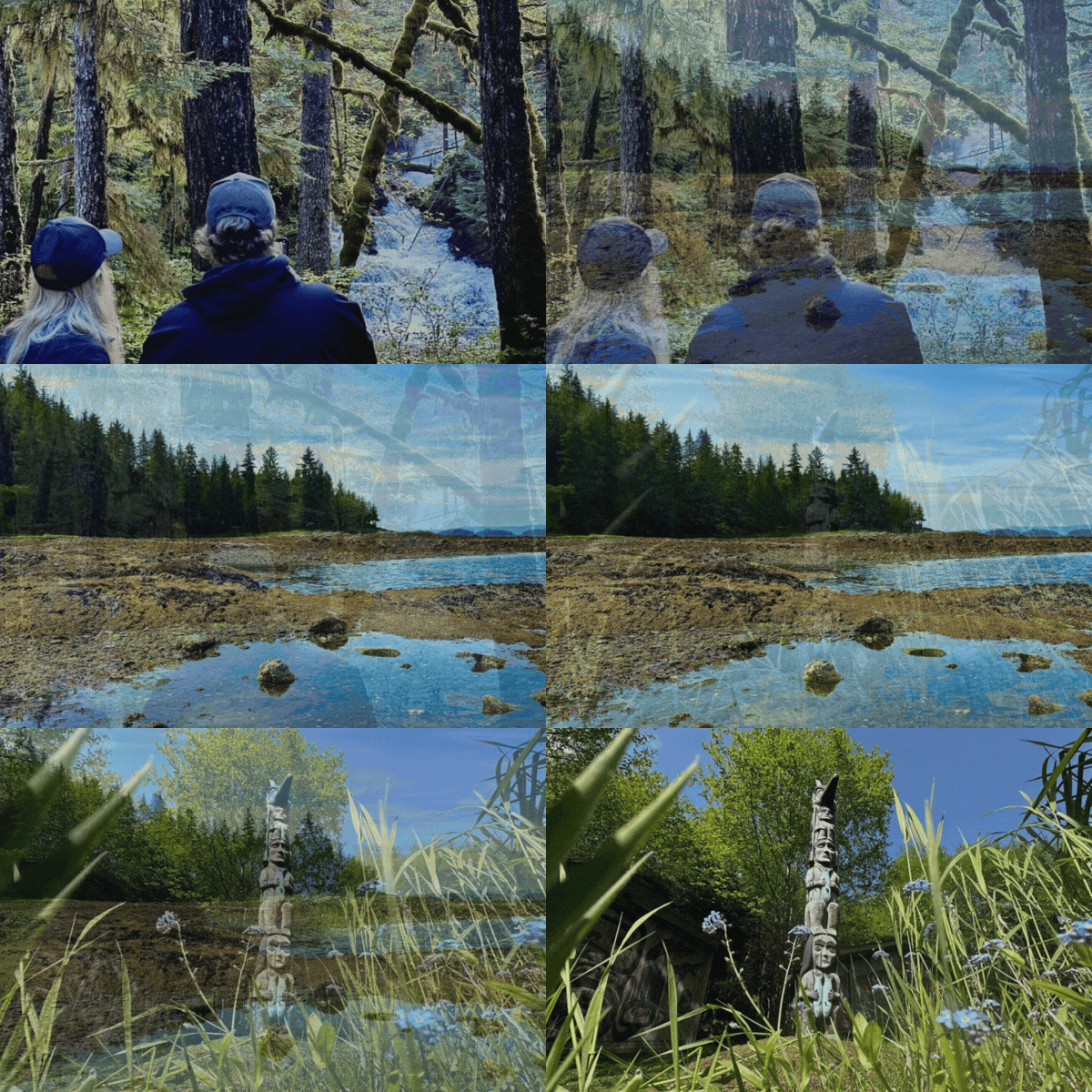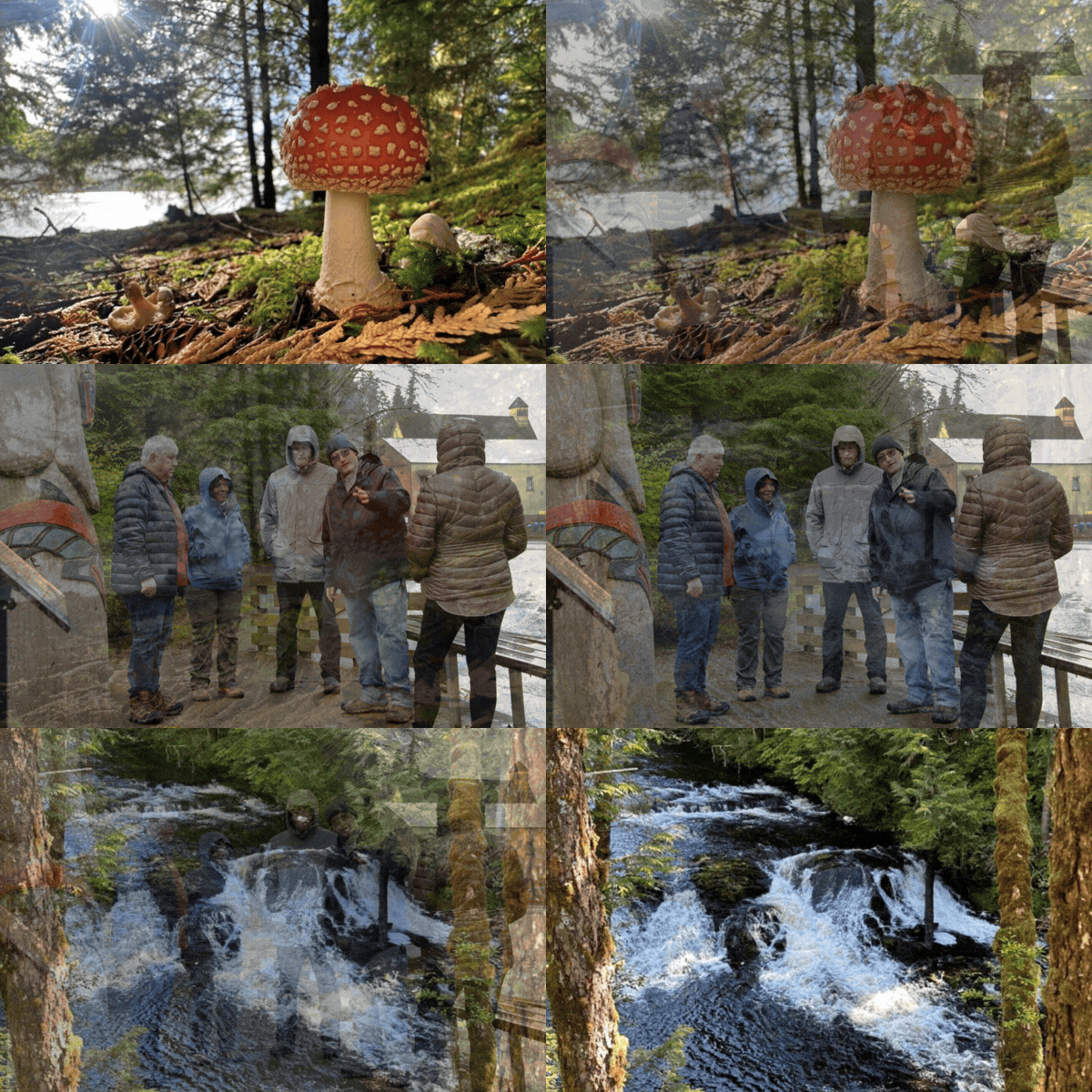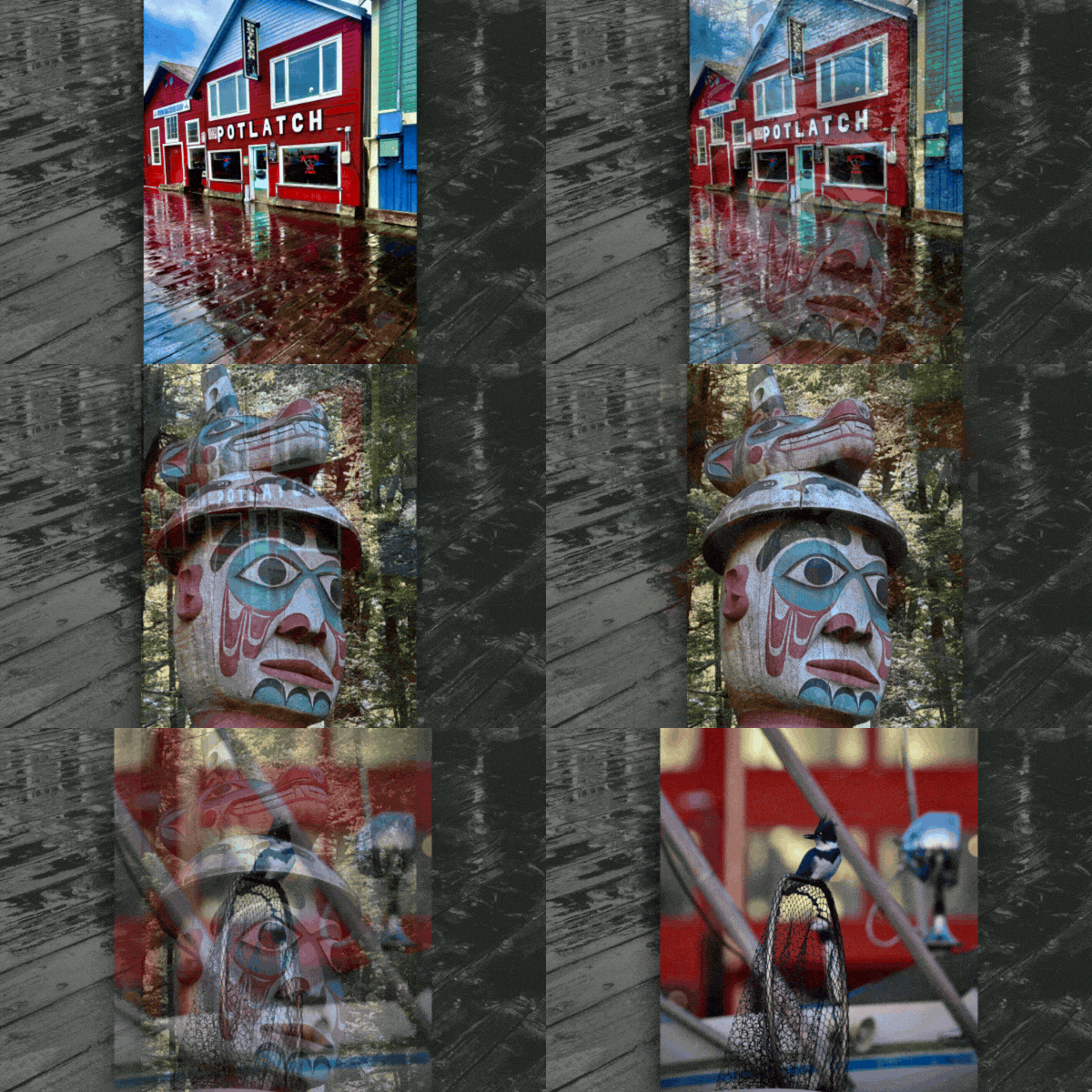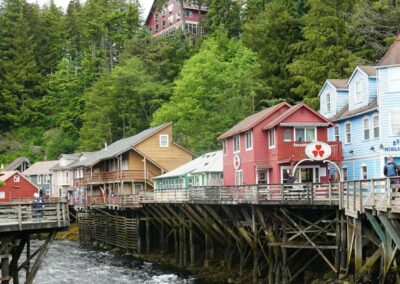
Ketchikan sits at the edge of the Tongass National Forest — 17 million acres of temperate rainforest, the largest in the United States. It’s one of the most biodiverse ecosystems in North America, and a visit here puts you in the middle of it. Here’s what you’re likely to see.
Wildlife
Bears are the headliner. Black bears are common throughout the Ketchikan area, particularly near salmon streams during the summer and fall spawning runs. Watching a bear fish in a creek is exactly as incredible as it sounds. Brown bears range the more remote areas of the archipelago and are spotted on guided backcountry tours.
Bald eagles are everywhere — perched on dock pilings, soaring over town, and congregating in huge numbers near salmon streams. The Tongass supports one of the highest concentrations of bald eagles on Earth.
Humpback whales feed in the cold, nutrient-rich waters of the Inside Passage from spring through fall. Breaches, tail slaps, and bubble-net feeding events are common sightings on the water. Orca pass through seasonally as well — a sighting is memorable in a way that’s hard to put into words.
Wolves — specifically the Alexander Archipelago wolf, a subspecies found only in Southeast Alaska — travel the beaches and forests of Revilla Island and surrounding islands. They’re elusive, but for those who know where to look, encounters do happen. It’s the rare wildlife experience that stops you cold.
Sitka black-tailed deer are spotted regularly along forest edges and beaches. Harbor seals and Steller sea lions haul out on rocks throughout the waterways. And of course, Pacific salmon — all five species — return each summer to fill the creeks and drive the entire ecosystem.
Plants
The forests here are dominated by Sitka spruce and western hemlock — massive, moss-draped conifers that can live for centuries. Walking through old-growth forest in the Tongass is one of those genuinely humbling experiences. The trees are enormous, the light is green and filtered, and the silence is deep.
The understory is lush with ferns, mosses, and devil’s club — a sprawling shrub covered in vicious spines that’s a good argument for staying on the trail. In late summer, wild blueberries and salmonberries ripen along trail edges and are eagerly consumed by bears, birds, and hikers alike.
In early spring, skunk cabbage signals the season’s change with dramatic yellow blooms rising from the wetlands — gorgeous, and memorably pungent.
Get Into It
The best way to experience the Tongass is with someone who knows it. Ketchikan Photo Safari and Wild Wolf Tours are guided experiences designed to take you deep into the wildlife and landscapes of Southeast Alaska, with guides who know where to go and what to look for.